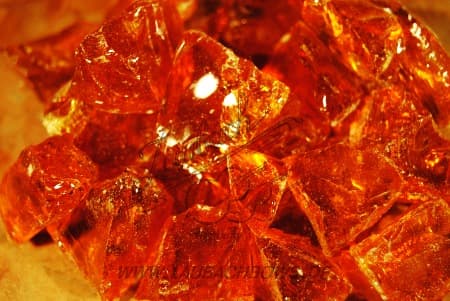
Rosin derives its name from the ancient city of Kolophon, located north of Ephesus and Smyrna, where the so-called "bow resin" was produced in large quantities. Kolophon was a unique trading center for the sale of rosin. As ancient documents testify, tree resin was used in a wide variety of everyday situations. It was a favorite tool of illusionists performing tricks for onlookers in market squares. Its healing and embalming properties were widely used by physicians of the time. During archery competitions, ancient Greeks invariably coated their arrows with rosin. Contemporaries of the characters in the "Iliad" and "Odyssey" used pine resin to impregnate and seal the seams of sea vessels, on which brave Greeks sailed in hopes of conquering the Trojans. The famous Olympic torches always contained rosin components in their base. To this day, Greece maintains the tradition of using pine resin to seal the seams of barrels when storing white wine.
Rosin was an essential component in the production of lubricants. In 17th-18th century Germany, travelers covering long distances in carriages were required to pay so-called "Schmiergeld" (grease money) at stations along their route. Thus, an entirely mundane term later acquired a rather unambiguous meaning, used in modern German to denote a bribe.
The diverse applications of rosin and its derivatives could be listed at length. It is used for sizing paper and cardboard, as an emulsifier in the production of synthetic rubber, in the manufacture of plastics, artificial leather, linoleum, paints and varnishes, electrical insulating mastics, in the pharmaceutical industry, and in brewing. The antiseptic properties of coniferous resins have been known since ancient times and are successfully used in aromatherapy to enhance blood circulation. Rosin is also used alongside other natural resins, such as mastic, copal, and sandarac, in mixtures for varnishing violins, violas, cellos, and double basses. However, its use in playing stringed musical instruments—violins, violas, cellos, and double basses—holds particular interest.
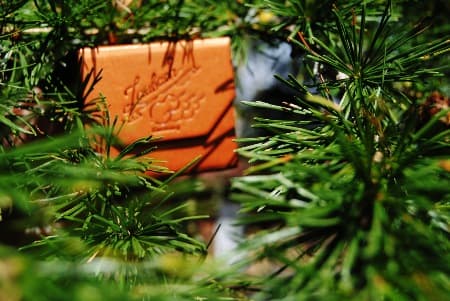
The earliest references to bows for stringed instruments appear in Asian and Arabic sources from the 9th century CE. Around the same time, the first attempts were made to find a suitable material to improve the grip of strings by the bow hair. The hair is a crucial component of the bow, enabling contact between the bow and the instrument. A small but indispensable aid in playing is rosin. Only rosined hair allows for full-fledged playing on the instrument. The variety of rosin types stems from the wide range of source materials. Today, over 100 species of pines, firs, and spruces are suitable for resin extraction. In the past, resin extraction from coniferous trees was carried out in hard-to-reach areas where transporting timber was nearly impossible or very costly. Often, entire villages in mountainous regions covered with coniferous trees were engaged in the extraction, processing, and sale of tree resin, which was practically their only source of income.
European chronicles from 1546 mention several villages located at the foot of Mount Kniebis. The residents of these villages collected 200 centners of resin in a year, which was sold at the annual fair in Straßburg. Curious incidents also occurred. Since tree resin was highly valued, cases of resin theft were not uncommon. Resin extraction was primarily widespread in North America, southwestern France (Bordeaux), Austria, and southern Germany (Tyrol). Experts determine the origin of resin by its color: the purest French resin has a transparent golden hue, while German resin has a noble amber shade.
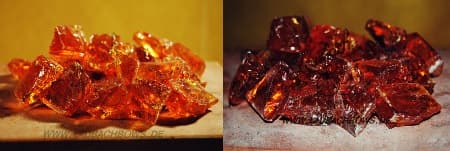
The technology for producing rosin for violins, violas, cellos, and double basses has not undergone significant changes. Today, as in ancient times, turpentine oil is obtained from coniferous tree resin through distillation, while the residues—resin, acids, and water—are evaporated. All impurities settle, leaving the purest resin. Subsequently, certain components, the names of which are kept strictly secret from competitors, are added to this resin during rosin production.
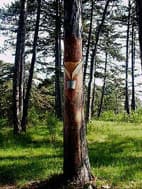
It is known that a single mature pine tree produces no more than 2 liters of resin per year. The diameter of the trunk is a critical factor: only trees with a diameter of at least 30 cm are suitable for resin extraction. In the first year, resin is collected from the eastern side of the trunk, then from the northern, followed by the western, and finally the southern side. In the fifth year, the tree is given a rest, and the 5-year cycle repeats. From early March, preparations for resin collection begin: incisions are made in the bark, and containers are attached. When the containers are filled with precious resin, women take over, pouring the collected resin into barrels and sending it for further processing. No more than five collections occur annually, with the last one in November. Special attention is paid to allowing the tree to heal its bark before winter. Scientists have studied trees from which resin was extracted before World War I and which continue to grow today. A tree subjected to resin collection releases special phytoncides that destroy various fungi and bacteria, aiding bark regeneration. Thus, it has been proven that coniferous tree resin is not sap essential for the tree’s vitality but a means of healing its wounds.
Musicians often wonder which rosin is best for violins, violas, cellos, or double basses. There is no definitive answer to this question. It depends primarily on the musician, their instrument, their idea of ideal sound, and their playing style.
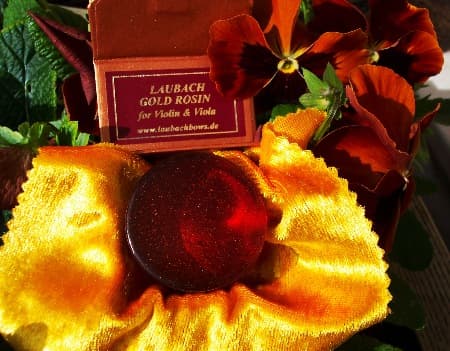
It is known that the quality of coniferous tree resin varies greatly, with its melting point ranging from 80°C to 125°C. The hardness of rosin depends on the temperature at which it is processed, which in turn determines its suitability for specific instruments—from violins to double basses. Musicians choose rosin individually based on the strings they use. Instruments with stiff metal strings require rosin with low adhesion. Instruments with synthetic plastic-based strings need rosin with medium adhesion. Instruments with gut strings require rosin with the highest adhesion.
Thus, as a rule:
- Violin bows require harder rosin;
- Viola bows are suited to medium-hardness rosin;
- Cello bows need softer rosin;
- Double bass bows require the softest and stickiest rosin.
According to a study by Swedish physicist Anders Askenfeldt on the principle of sound production with a bow, it has been documented that the vibration period consists of two phases. In the first phase, the bow grips the strings, and the rosin applied to the bow hair heats up at a microscopic level to a temperature of 70°C–90°C, melting in the process. As a result, the bow hair momentarily loses contact with the strings. Meanwhile, the cooled section of rosined bow hair grips the strings, and the next phase resumes. Askenfeldt confirms his observations using an ultraviolet camera, which reveals the remarkable heating of the bow hair during playing. It is also important to consider that ambient temperature significantly affects the melting point of rosin during playing. This, among other factors, explains the difference in the instrument’s sound in a warm concert hall versus a cold environment.
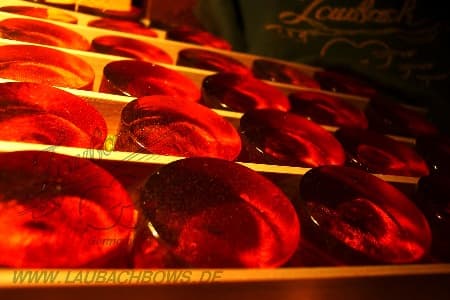
The quality of rosin depends on the raw materials and various additives used in its production. Cheap rosin is made from paper production waste with the addition of various chemical additives: plasticizers, preservatives, and others, which negatively affect the instrument’s varnish and the musician’s health. If such sticky rosin is used, it is recommended to apply it sparingly. Otherwise, it can cause unpleasant overtones during playing and sticking of the bow hair. After each use of such rosin, care must be taken to remove stuck areas on the bow hair ribbon and ensure the hair is evenly distributed along the bow stick’s length. Such rosin contributes to producing quality sounds, but the difference compared to more expensive handcrafted rosin made from natural resin without harmful chemical additives is noticeable.
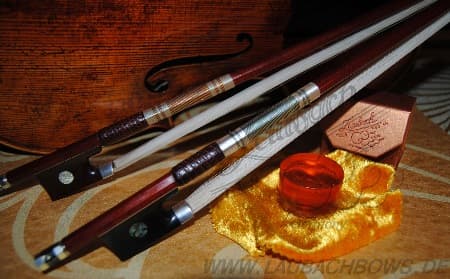
Premium gold rosin Laubach, with its unique consistency containing 999 fine gold microparticles. What makes this rosin special? To answer this, it’s worth noting that natural horsehair is used in bow making. The external structure of the hair resembles a pine cone, covered with scales (cuticles). Over time, these scales wear down and stick together, causing the bow hair to slip and poorly grip the strings.

Rosin containing gold microparticles lifts the scales, opening up the hair’s structure, creating maximum adhesion and string grip with the bow hair ribbon. This produces the effect of “freshly installed” hair in the bow, improving the sound quality even in instruments with a weak tonal range.
.
In producing Laubach gold rosin, we use 999 fine gold, which is much softer than the metal used in string windings. As a result, gold dust does not damage the strings, and they do not wear out more than with regular rosin. The bow hair lies evenly on the strings, perfectly gripping them and enhancing the instrument’s sound.
Laubach gold rosin exhibits stable qualities in both high humidity and varying temperatures, allowing for a strong, harmonious sound. It is indispensable for solo performances, playing in large concert halls, and performing duets with a piano.
Some musicians eagerly experiment with different rosin types, using soft rosin for cold environments and hard rosin for concert halls. Regardless of the results of these experiments, one rule remains critical: rosin should not crumble excessively when applied to the bow hair or during playing. Crumbly rosin heavily contaminates the instrument’s varnish, complicating its maintenance. Additionally, rosin dust can cause allergic reactions in some musicians, manifesting as nasal congestion and other unpleasant symptoms. Fortunately, such reactions are rare. High-quality rosin does not crumble, which is a key criterion of its quality.
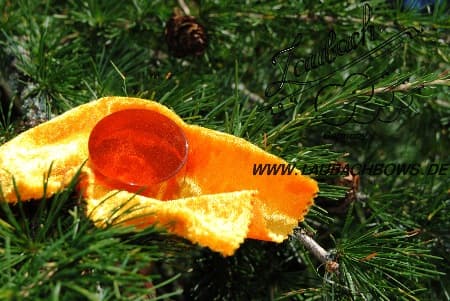
When purchasing rosin, its freshness is crucial. Even the best rosin changes its structure over time, simply drying out. Rosin should not be used for more than 8 months, and for soloists, no more than 6 months. Fresh rosin smooths out inaccuracies and roughness during playing, which is likely why many students prefer fresh rosin when preparing for and taking exams. The second important quality criterion is transparency. Since rosin is made from various types of coniferous tree resin, mixing different rosin types on the bow hair should be avoided. This can sometimes cause an adverse reaction, hindering the bow hair’s grip on the strings. Before using a new rosin type, the bow hair should be thoroughly cleaned with alcohol, taking care not to touch the varnish on the bow stick. The hair should then be allowed to dry for at least 30 minutes before applying fresh rosin.
.Rosin significantly impacts the sound and playability of the instrument and bow, serving as an indispensable natural material whose tradition of use continues today. Thus, refined coniferous tree resin, molded into shapes, helps musicians harmoniously produce divine musical sounds.
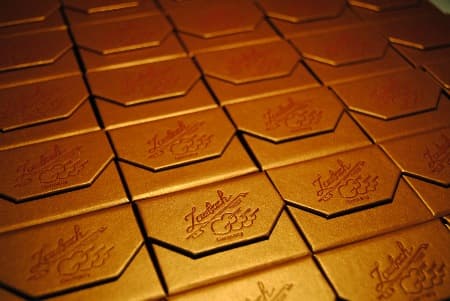
T. Laubach
The article uses materials from the university archive in Bamberg, Germany.